Asking for feedback is an essential professional skill for Registered Behavior Technicians (RBTs). When considering how RBTs should ask for feedback, clear, respectful communication helps improve implementation, strengthens supervision, and supports ethical ABA practice.
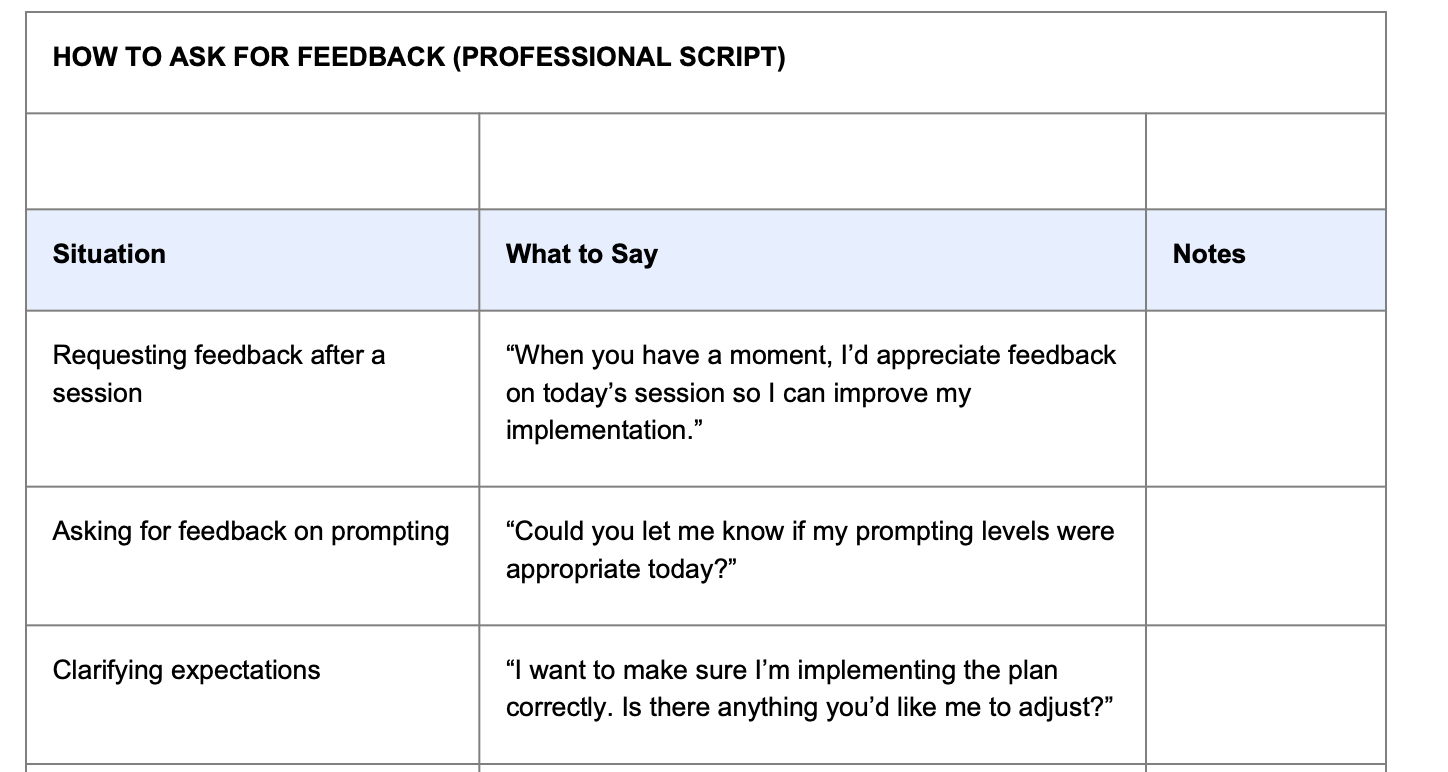
Why RBTs Need a Feedback Script
Many RBTs want feedback but feel unsure how to ask. Without clear language, requests can feel awkward or unclear.
Using a feedback script helps RBTs:
- Clarify expectations with supervisors
- Request coaching or modeling when needed
- Respond appropriately to corrective feedback
- Build confidence and professional communication skills
This supports growth while keeping feedback conversations productive and respectful.
What’s Included in the How to Ask for Feedback Script
The How to Ask for Feedback Script for RBTs includes:
- Sample scripts for requesting feedback after sessions
- Professional language for clarifying expectations
- Examples for asking for modeling or guidance
- Appropriate responses to corrective feedback
- Key reminders for using feedback to improve practice
The one-page format makes these scripts easy to use and practice, whether during supervision, training, or onboarding.
Who This Resource Is For
This script guide is designed for:
- Registered Behavior Technicians (RBTs)
- ABA therapists and behavior technicians
- ABA onboarding and supervision programs
- School-based, clinic-based, and in-home services
It pairs well with daily reflection sheets and session checklists. Together, these tools support daily growth and better client care.
Using Feedback to Grow as an RBT
Every RBT works under ongoing supervision, as outlined in the BACB’s RBT requirements, so feedback conversations come up often. Asking with clear, professional language helps you get more out of each supervision meeting and turn corrective feedback into real progress. Try one script at your next supervision meeting, then write down what you learned so you can track your growth over time.
For more ways to build your professional skills, see our script guide for talking with parents and our RBT PDU courses.